about the branch
Ninety-seven years of organizing for political, educational, social, and
economic equality along Philadelphia's Main Line.
Est. 1929 · Bryn Mawr, PA
FOUNDING
In 1929, O.B. Cobb, Sr., along with three other visionary individuals — Mr. W.W. Hines, Mr. Charles Plant, and Mr. Arthur Shorter — founded the NAACP Bryn Mawr Branch. Their shared commitment was to improve conditions for Black people on the Main Line, setting the stage for a transformative journey. The founding officers were Mr. O.B. Cobb, President; Mr. William Hines, Secretary; Mrs. Elizabeth Smith, Assistant Secretary; and Mr. Charles B. Plant, Treasurer.
THE BERWYN SCHOOL FIGHT
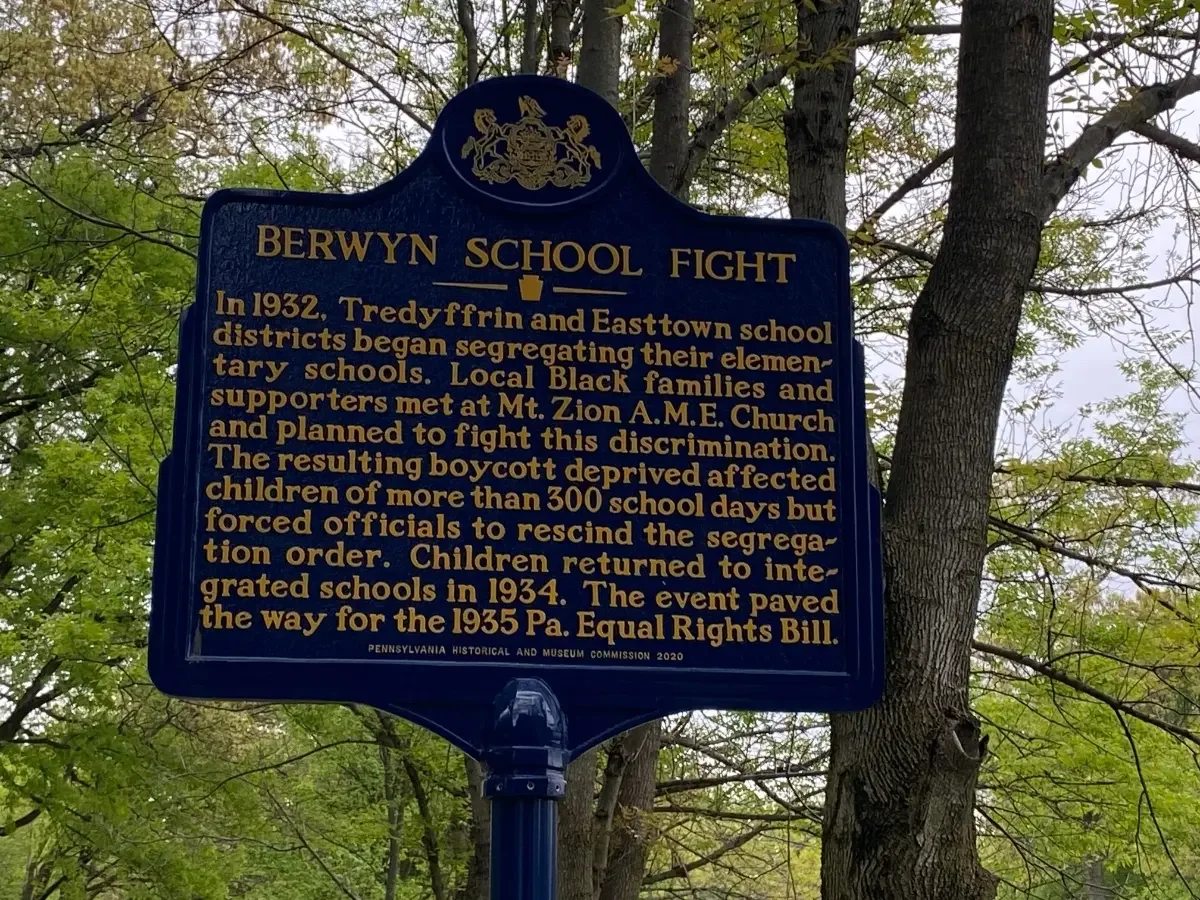
The Bryn Mawr branch gained recognition for its efforts in the Berwyn School Fight of 1932, with Raymond Pace Alexander serving as their lawyer. That year, the Main Line Branch fought segregation on the Upper Main Line in the Easttown School District. A new school had been built in Berwyn, Pennsylvania — but the School Board moved to reserve it for white children while relegating Black children to the condemned old school. O.B. Cobb, Sr. and the Main Line Branch opposed this, taking the fight to the Pennsylvania Supreme Court. The Black children lost a year of schooling in the process, but Cobb's dedication earned him national recognition — a Gold Medal from the NAACP National Board. The branch's impact reached beyond the courtroom: along the Main Line, the Main Line Times stopped its practice of referring to Black residents as "Darkies" in its weekly paper.
GROWTH ALONG THE LINE
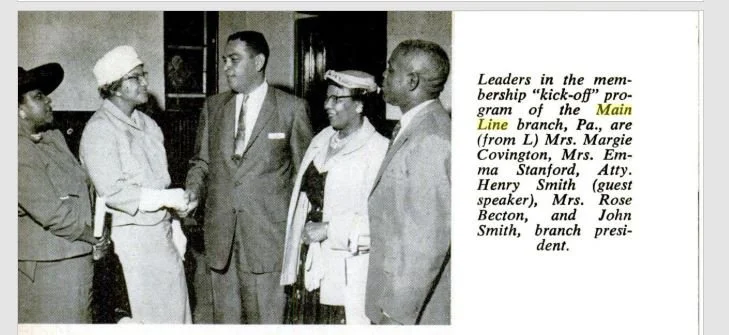
Under O.B. Cobb, Sr.'s leadership, the Bryn Mawr Branch outgrew its original boundaries, expanding to cover every community along the Main Line and becoming the Main Line Branch. In 1942, under Warren Chew, the branch worked with the Committee on Fair Employment Practices to secure 14 skilled jobs for Black community members. In 1951, the branch's name officially changed to the NAACP Main Line Branch, reflecting the wider community it served. In 1960, under John Smith, the branch opposed redevelopment plans for Ardmore and Bryn Mawr that would have disrupted historically Black neighborhoods. In 1963, the branch protested the inferior education provided at Lower Merion School District's predominantly Black Ardmore Avenue Elementary School. In 1966, it called for more job opportunities for Black community members within the district. In 1971, members picketed Paoli Hospital for job opportunities; in 1985, they picketed the Great Valley School District for the same. From 1964 to 1988, Robert Wright served as President, providing steady leadership through a pivotal period for the branch.
Presidents of the Main Line Branch
-
-
-
-
-
-
Item description
-
-
-
-
-
-
-
-
-
-
-
-
where we are
Where Is the Main Line Branch?
The Main Line refers to a historic, informally defined region in suburban Philadelphia that runs along the former Pennsylvania Railroad's Main Line,
extending northwest from Center City parallel to Lancaster Avenue (U.S. Route 30).
Its core communities, running along the old Paoli/Thorndale rail line, include Merion, Narberth, Wynnewood, Ardmore, Haverford, and Bryn Mawr.
Beyond Bryn Mawr, the Upper Main Line includes Rosemont, Villanova, Radnor, St. Davids, Wayne, Strafford, Devon, Berwyn, Daylesford, Paoli,
and Malvern — along with nearby King of Prussia and Havertown.
We serve these school districts:
— Lower Merion School District & Upper Merion Area School District (Montgomery County)
— Radnor Township School District & School District of Haverford Township (Delaware County)
— Tredyffrin/Easttown School District & Great Valley School District (Chester County)
We serve these townships & boroughs:
Easttown · Haverford · Lower Merion · Malvern · Narberth · Radnor ·Tredyffrin · Upper Merion · West Conshohocken